





Given today’s fast-paced working environment, measures to ensure the safety and well-being of employees are becoming increasingly important. One of the cornerstones of various occupational safety regulations is the development of an effective fire emergency plan, and the associated fire safety training.
By equipping employees with the knowledge and skills required to prevent, detect and respond to fire hazards, organisations not only fulfil their legal obligations, but they can also increase the trust placed in them. Furthermore, they can create a safer working environment for everyone involved.
In this comprehensive guide, we explore the importance of workplace fire emergency plans and fire safety training. We outline the benefits of such training for employees, and how organisations can benefit from an effective fire safety programme.
The benefits of a fire emergency plan and fire safety training
By providing fire safety training for employees, teaching them prevention methods, and drawing up a fire alarm plan designed for emergencies, employers can significantly reduce the risk of damage caused by fires.
1. The protection of human life and property
Employees who have undergone fire safety training are better able to recognise potentially fire-hazardous situations, such as those arising from the improper storage of flammable and chemical substances, or faulty electrical wiring. During the training, they will learn what proactive steps they can take in such situations to mitigate risks.
In the event of a fire, trained staff are able to respond quickly and effectively, thereby helping to minimise damage, and, most importantly, ensuring their own safety and that of their colleagues.
2. Boosting staff morale
Fire safety training can also boost staff morale and self-confidence. Thanks to fire safety protocols and fire emergency plans, employees can feel safer and more in control in the workplace.
Knowing that, in the event of an emergency, they possess the knowledge and skills needed to manage the situation, staff can gain greater confidence in dealing with challenges.
This increased sense of security can boost overall workplace motivation, and foster a culture of trust and accountability within the organisation, where employees actively look out for one another’s well-being.
3. Compliance with fire safety regulations
Compliance with fire safety regulations is a legal and moral obligation for companies. Fire safety training helps employees to understand and follow these rules, thereby reducing the risk of breaches and the associated penalties.
By holding regular fire safety training sessions, organisations can demonstrate their commitment to meeting the highest safety and compliance standards.
Keeping pace with evolving regulations and industry best practices ensures that employees are able to navigate the constantly changing landscape of fire safety requirements.
4. The organisation’s reputation may improve
By prioritising compliance with fire safety regulations, companies can demonstrate their commitment to the well-being of their employees, which in turn can have a positive impact on the company’s public image.
Providing staff with up-to-date fire safety training is a proactive investment by companies in the well-being of their employees. In doing so, these organisations are sending a message to their clients, partners and the wider professional community that they treat security as a priority. This approach can enhance the organisation’s reputation and boost stakeholder confidence. The effective management of a potential fire incident can also contribute positively to these outcomes.

What does fire safety training cover?
The aim of fire safety training is to equip employees with practical skills that will enable them to effectively identify, prevent, and manage potential fire incidents. Below, we outline the most important skills that employees can acquire during the training.
1. Identifying potential fire hazards
One of the most important cornerstones of the effective implementation of a fire emergency plan is that employees are able to recognise fire hazards.
This includes fire triangle – an understanding of the concepts of oxygen, heat and fuel, as well as an understanding of how these various factors can contribute to the development of a fire hazard.
2. Safety measures to prevent fires
Fire safety training includes instructing employees on how to prevent fires safely. This includes providing information on the proper handling and storage of flammable materials, the regular and proper maintenance of electrical equipment, and compliance with smoking policies and fire safety protocols.
3. Emergency measures
An effective fire emergency plan requires that employees are provided with clear, practical guidance on how to deal with fire emergencies appropriately and promptly. An important part of fire safety training is guidance on how to respond to an alarm, as well as on evacuating buildings and contacting the emergency services.
This may include drills and simulations, during which staff can practise evacuation procedures and gain experience in using emergency exits and assembly points.
4. The correct use of fire extinguishers
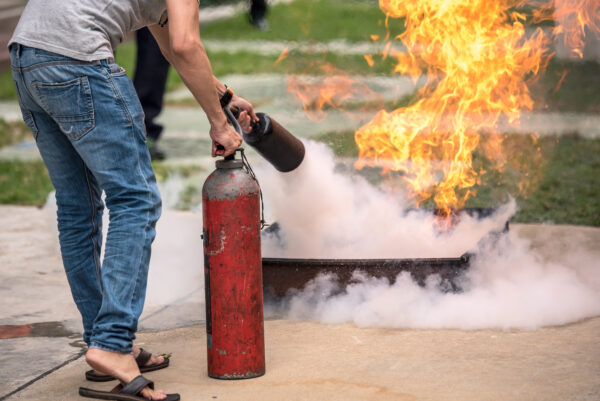
During the fire safety training, participants can gain up-to-date knowledge of different types of fire, fire extinguishers, as well as how to handle them safely and the techniques required for their effective use. This includes understanding the vaccination capacity indicated on the label and being able to read the pressure gauge correctly.
The training includes practical exercises using the equipment, ensuring that staff are able to use it quickly and competently in the event of an emergency.
5. Organised evacuation
Another essential component of the fire emergency plan is the designation of evacuation routes and assembly points, as well as training staff in methods for the safe and efficient evacuation of the building. This may include appointing evacuation supervisors, who coordinate the evacuation of the building even during drill exercises, and keep track of the staff present.
European Union directives on fire safety education
The European Union directives and standards ensure the fire safety of buildings. This is based on the EN 13501-1 and -2 series of European standards, which deals with the classification of construction products and building structures based on their fire behaviour and fire resistance duration.
The regulations cover fire safety training, emergency preparedness, as well as specific requirements for the design and construction of buildings to minimise the risk of fire and to mitigate the effects of a potential fire.
Below, we outline the aspects of EU regulations relating to fire safety training.
1. Preventive measures
The standards emphasise the importance of fire prevention measures, such as the regular maintenance of fire detection and fire-extinguishing systems, the proper storage of flammable materials, and compliance with smoking bans and other fire safety protocols.
2. Safe evacuation
The law requires organisations to ensure that their emergency response plans always include evacuation procedures.
The risk assessment for evacuation and the fire emergency plan must be carried out at the design stage of the buildings. At this stage, the accessibility of the building’s escape routes is assessed, the building’s safety level is classified, and routes for the safe evacuation of the building are designated.
3. Use of fire-fighting equipment
All employees must be familiar with the various fire extinguishers their proper use in the workplace. Employers or supervisors must ensure that the building is left in a condition that is safe from a fire safety perspective after working hours.
Care must also be taken to ensure that fire extinguishers are placed in easily accessible, clearly visible locations and that the equipment is regularly maintained.
4. Compliance with building regulations and standards
It must be ensured, as early as the design phase of buildings, that they comply with the relevant fire safety regulations and standards, including requirements relating to fire resistance, compartmentalisation, exits, and fire detection and fire-fighting systems.
Summary
Providing staff with appropriate fire safety training and drawing up a fire emergency plan in line with current regulations is essential for creating a safe working environment. Organisations can demonstrate their commitment to the highest levels of safety and preparedness by complying with regulatory requirements and keeping pace with industry best practices.
A Pwent provides innovative services to companies that manufacture and supply safe and effective fire protection equipment. The company specialises in the manufacture of gas cylinder racks, gas cylinders and machinery, as well as the inspection and refurbishment of fire extinguishers, as well as powder extinguishers, CO₂ fire extinguishers and the handling of chemicals.