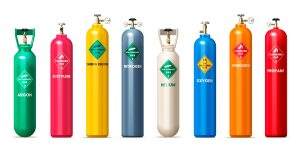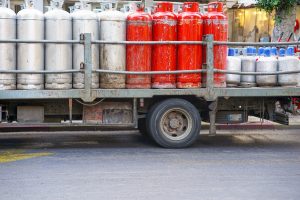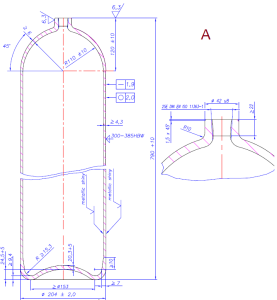

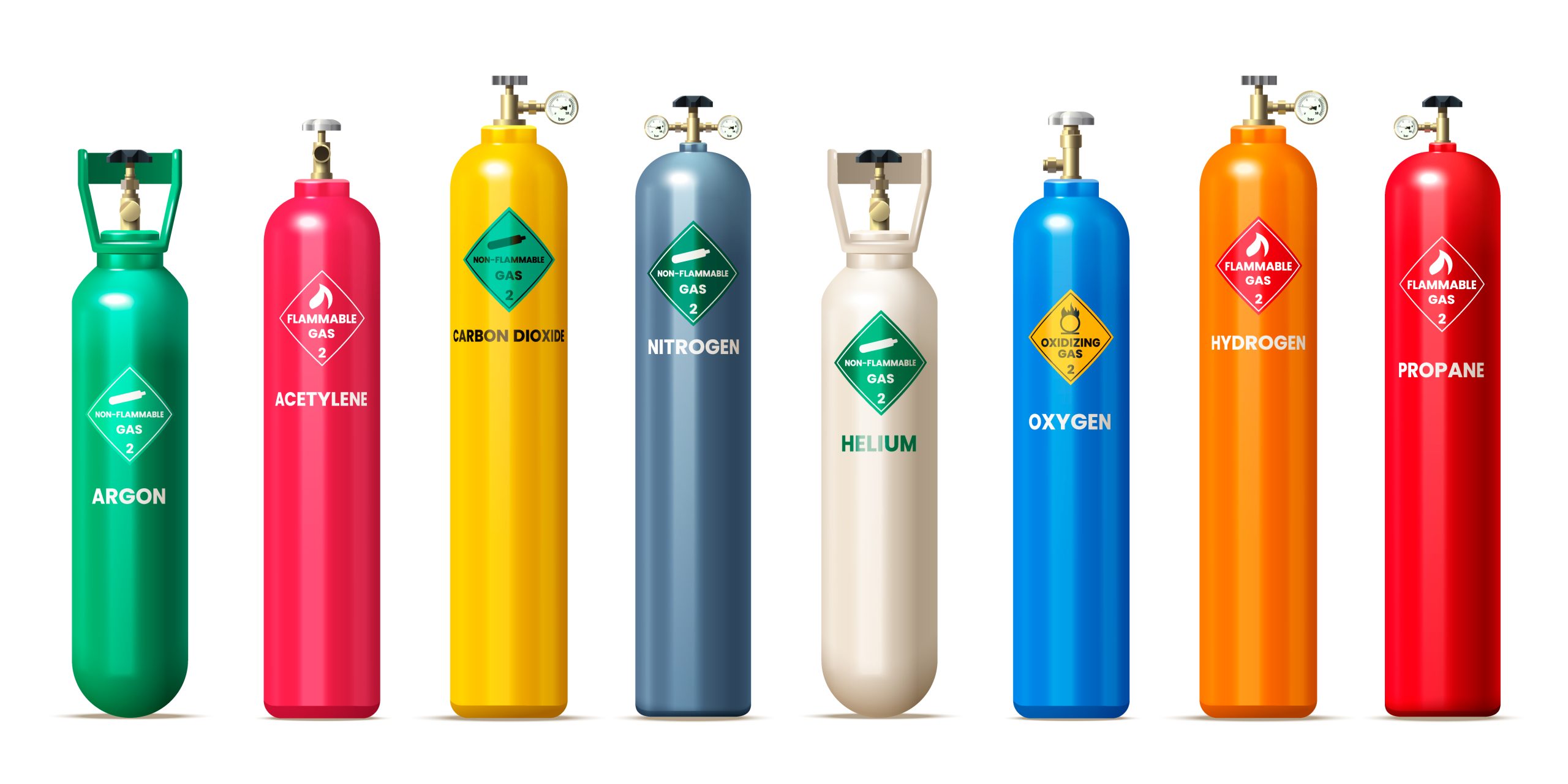
People often ask about the common gas cylinder sizes available on the market. What is the most generally accepted size range? We would like to help with that now with a small compilation. In the article, we have collected the characteristic dimensions of high-pressure and low-pressure gas cylinders separately.
Industrial, medical, and food-grade gas cylinder sizes
In this category, we generally mean high-pressure gas cylinders. Examples of such gases include carbon dioxide (CO2, UN1013), argon (Ar, UN1006), nitrogen (N2, UN1066), and oxygen (O2, UN1072). Typically, the operating pressure of gases in cylinders is above 60 bar.
We can see several types of reference in the tables. Sometimes a litre is given, sometimes a kilogram, and sometimes the size of gas cylinders is indicated in cubic metres.
3 main types of gas cylinder
Permanent gases
This refers to gases that maintain their gaseous state even under pressure, for example, nitrogen, oxygen, or argon.
Liquefied gases
Under pressure, these change state and become liquid. Examples include carbon dioxide and sulfur dioxide.
Dissolved gases
These are filled into cylinders in a dissolved state for safe transport and storage. The most characteristic example is acetylene, which is mostly dissolved in acetone.
Gas features and accurate information can be found on Air Liquide Gas Encyclopedia page.
Permanent gas cylinder sizes
Here we usually refer to bottle sizes in litres or cubic meters.
- A litre always refers to the capacity of the bottle. Therefore, into a 50-litre gas cylinder, we would be able to pour a minimum of 50 litres of water. Into a 1-litre cylinder, 1 litre, and so on.
- When referring to the capacity of a gas cylinder in cubic metres, pressure is usually included. A 10 m³ oxygen gas cylinder typically refers to a 50-litre cylinder with an operating pressure of 200 bar. The capacity of a gas cylinder is calculated by multiplying its volume by its operating pressure: 50 × 200 = 10,000 litres. Therefore, this cylinder holds 10,000 litres of oxygen, which, when divided by 1,000 due to the cubic metres, results in the designation of a 10 m³ cylinder.
Examples of calculating cubic meter capacity:
- 50-litre cylinder at 300 bar operating pressure: 50 × 300 = 15,000 litres, or 15 m³
- 40-litre bottle at 200 bar operating pressure: 40 × 200 = 8,000 litres, or 8 m³
As we fill gas into the gas cylinder, the pressure value in the gas cylinder rises continuously and proportionally.
For this simple calculation above, we do not take into account the compressibility of gases or changes in temperature. We are not touching on this here.
The most common permanent gas cylinder sizes on the market
- 1 litre
- 2 litres
- 5 litres
- 10 litres
- 12-litre – primarily for diving use
- 15 litres – primarily for diving use
- 20 litres
- 40 litres
- 50 litres
- 80 litres
- 100 litres
- 110 litres
- 120 litres
- 130 litres
- 140 litres
- 150 litres
- 160 litres
- 180 litres
- 200 litres
Besides these main dimensions, you can find intermediate sizes between these standard dimensions from manufacturer to manufacturer, but these usually refer to more rarely produced, project-specific sizes.
Typical dimensions of LPG cylinders
For liquefied gases, the capacity of the gas cylinder is typically always referred to by its kilogram value. In our current example, we will go through the typical sizes of carbon dioxide cylinders and LPG cylinders.
For liquefied gases, under pressure, the gas begins to transform from a gaseous state into a liquid state. Above the liquid portion, there is a gas cushion, which under normal conditions has a constant gas pressure. This is precisely why, unlike permanent gases, these gases cannot be filled by pressure. The pressure measured in a full cylinder will be exactly the same as the pressure in a half-full cylinder. Here, the weight of the gas filled will always be the determining factor. Therefore, we refer to the capacity of cylinders in kg, as we are specifying the weight of the gas that can be filled.
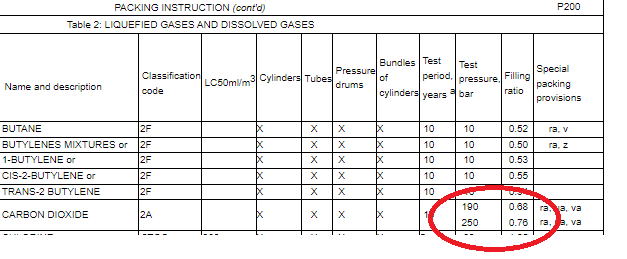
For an accurate calculation, we need to look into the European Agreement concerning the International Carriage of Dangerous Goods by Road P200 table, where the amount of liquefied gas that can be filled into a given gas cylinder type can be determined. For example, for carbon dioxide, we can fill 0.68 times the volume of the cylinder in kilograms into a cylinder with a test pressure of 190 bar for each litre of the cylinder. For example, into a 50-litre cylinder: 50 × 0.68 = 34 kg. Whereas 0.76 times the volume fits into a cylinder with a test pressure of 250 bar. Thus 50 × 0.76 = 38 kg, but in practice, it is usually calculated with 0.75, hence 37.5 kg.
Carbon dioxide typical gas cylinder sizes
- 2 kg – 2.67 litres
- 4 kg – 5.4 litres
- 5 kg – 6.7 litres
- 6 kg – 8 litres
- 10 kg – 13.4 litres
- 20 kg – 27 litres
- 30 kg – 40 litres
- 37.5 kg – 50 litres
- 50 kg – 67.7 litres
- 60 kg – 80 litres
Our carbon dioxide bottles are located here: CO2 gas cylinders from stock and manufacturer.If you can't find a suitable size, please call us.
PB cylinder typical gas cylinder dimensions
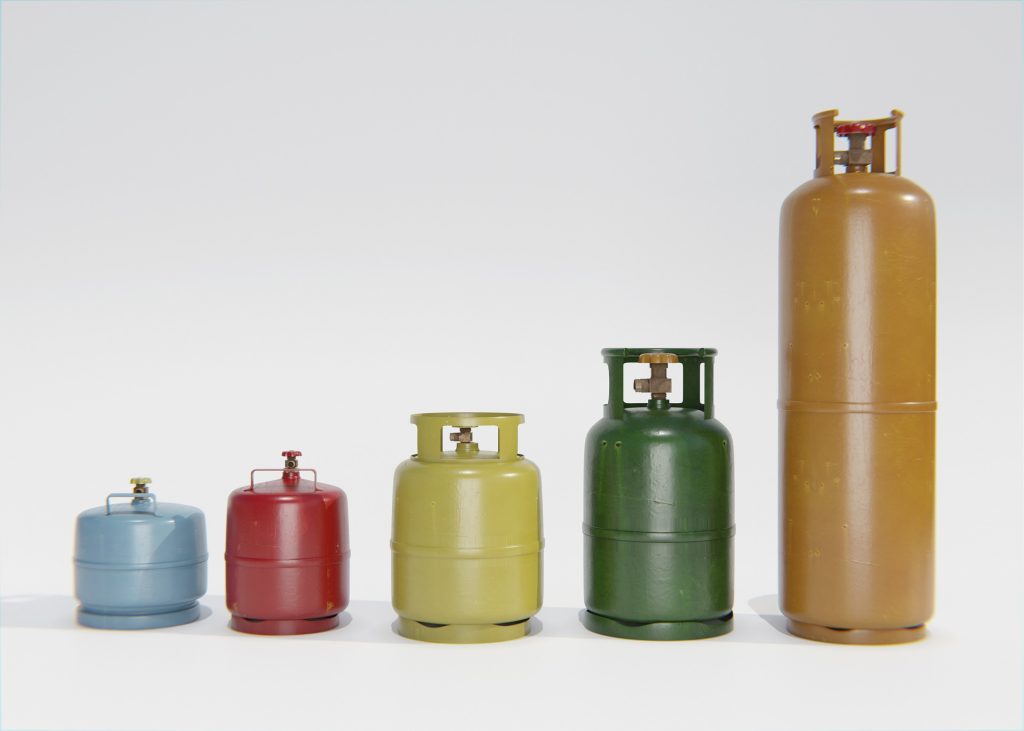
It's always a question of whether pure propane (C3H8, UN1978, 0.43 kg/litre in a cylinder with a test pressure of 23 bar), pure butane (C4H10, UN1011, 0.52 kg/litre in a cylinder with a test pressure of 10 bar), or possibly a mixture of these is filled into the gas cylinder. Accordingly, there may be slight differences in the filling mass/litre ratio.
- 2 kg – 4.8 litres
- 6 kg – 14.3 litres
- 11 kg – 26.2 litres
- 13 kg – 31 litres
- 19 kg – 38 litres
- 47 kg – 94 litres
You can find our different types of gas cylinders here: