




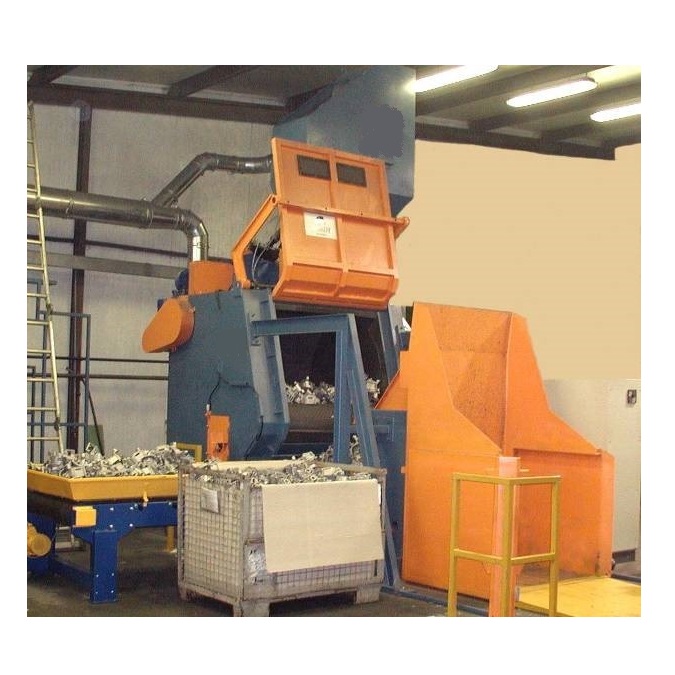
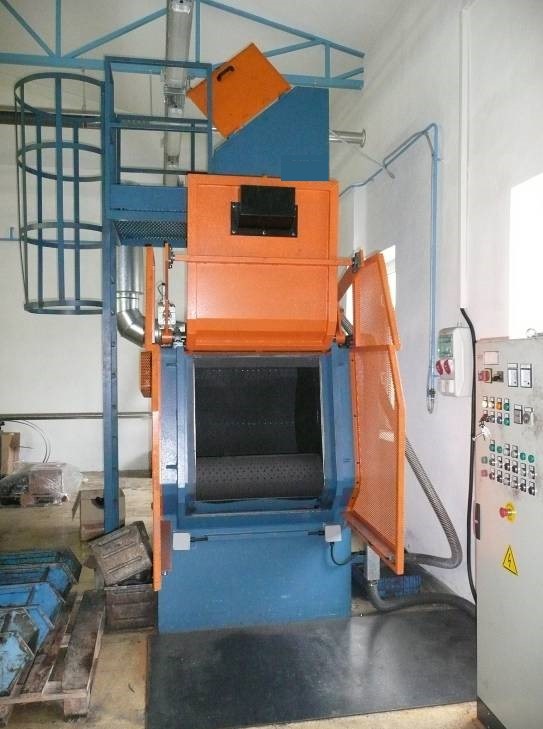
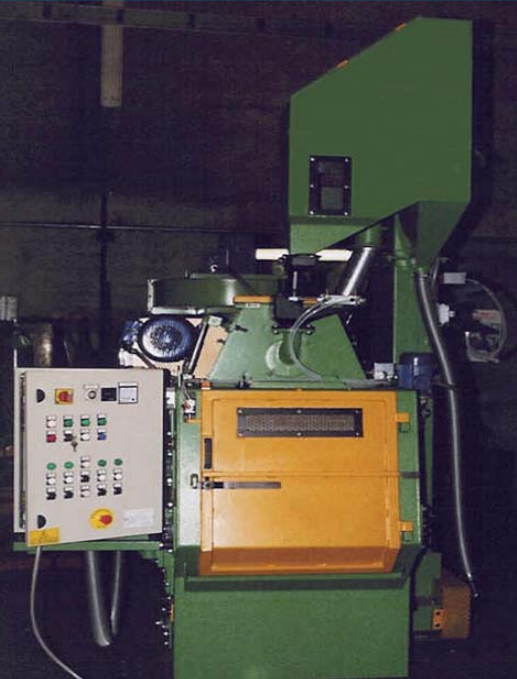
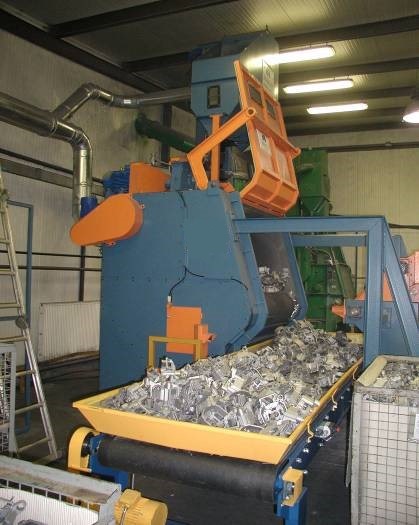
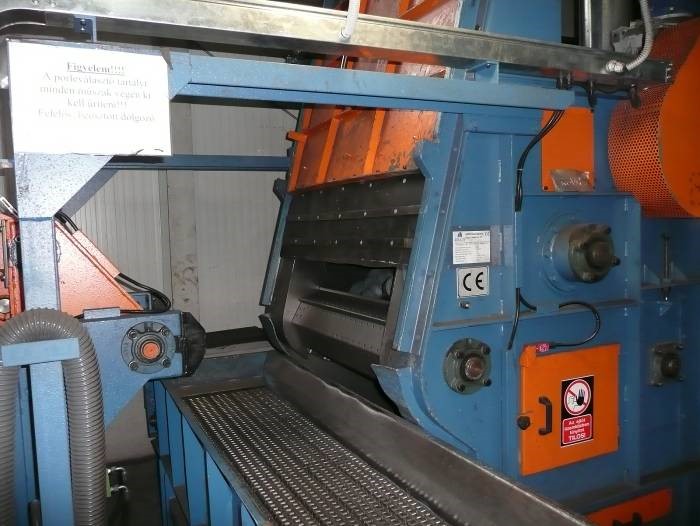
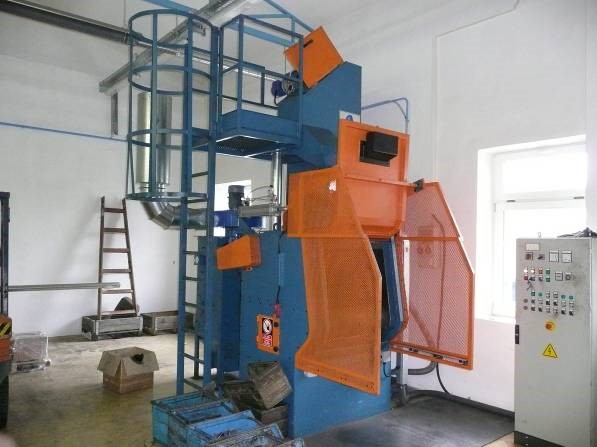
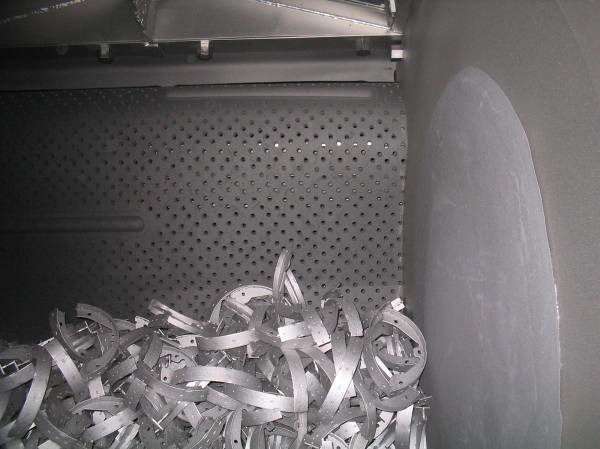
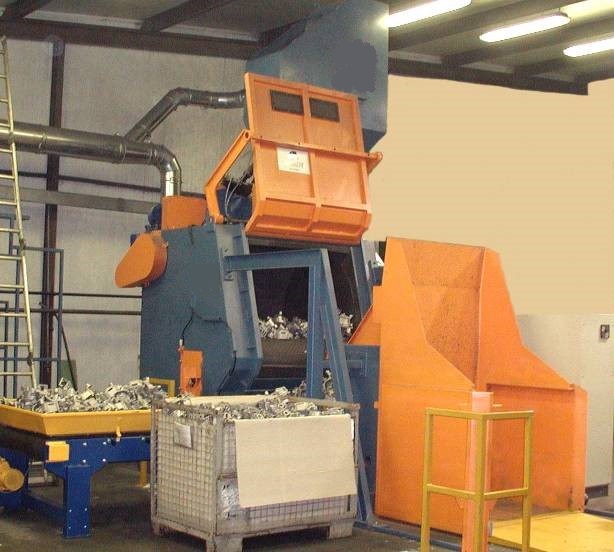
Rubber belt shot blasting machine for shot blasting gas cylinder parts and small gas cylinders. Rubber belt 750 mm wide, 700 mm diameter pulley. Charge 0,12 m3, 200 kg total, max 5 kg part weight
Durable structural design and standard solutions for safe operation.
Tailored to individual technical requirements, gas types and operating conditions.
Rubber belt 750 mm width, 700 mm diameter pulley. Charge 0,12 m3, 200 kg total, max 5 kg component weight. Caps for cleaning parts. The GH-type grit cleaning unit is mainly recommended for grit cleaning and surface treatment of cast, forged, stamped parts in bulk.
Arrangement drawing:
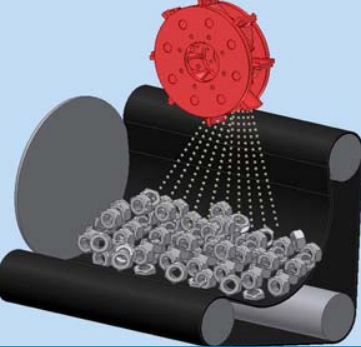
The GH type grit cleaning equipment is mainly recommended for the surface cleaning and surface treatment of cast, forged and stamped parts in bulk. The equipment is equipped with a single nozzle. The nozzle is a 6-blade design with axial gravity feed nozzle, mechanical pre-accelerator and precise nozzle jet adjustment.
The parts to be granulated must be placed on the rubber belt on the door at the front of the machine. As the rubber belt rotates, the workpieces roll over each other inside the machine housing while the grit from the nozzle cleans the entire surface.
As an option item we can supply the equipment with an automatic hydraulic loading device, which loads the prefabricated unit load into the equipment.
For optimum surface cleanliness, the amount of sprayed material and the spraying time can be infinitely adjusted. As an option, the nozzle speed can be equipped with a variable frequency drive.
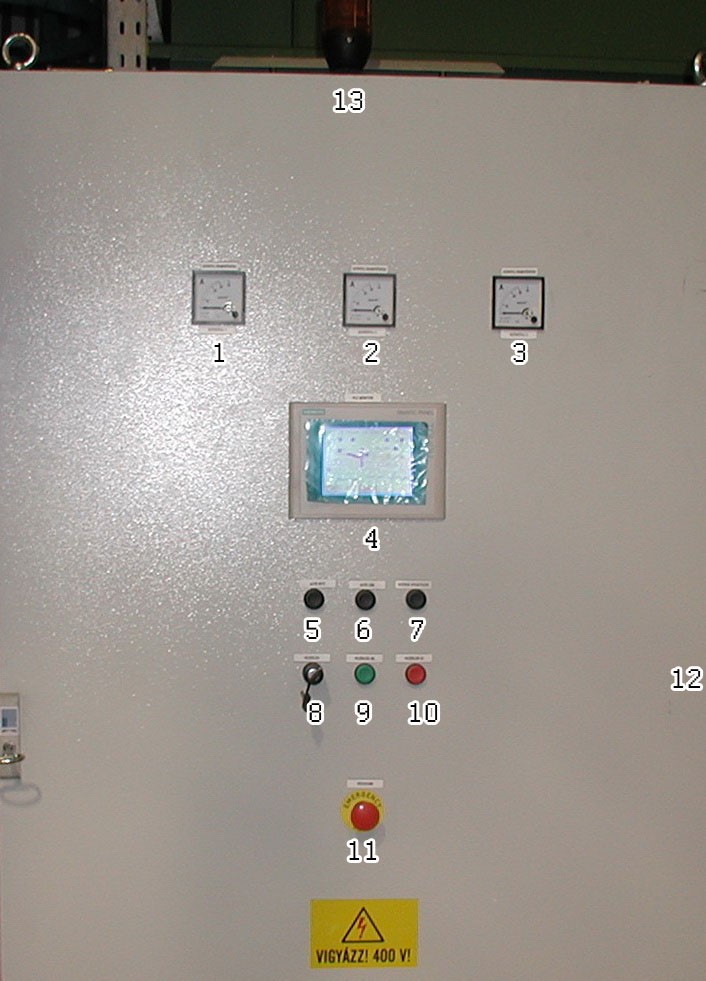
By varying the speed of the nozzle, the speed of the spray granule can be reduced or increased. The inner surface of the spray area in the active particle zone is covered with a high wear resistant manganese steel coating. Grain spraying is only possible with the cabin door closed, which provides perfect protection against grain bounce. Closed and continuous circulation of the spray agent is ensured by a serrated elevator, spray agent cleaning unit and dispenser. The cleaned parts can be discharged from the working area by turning the rubber belt back after the spraying is finished and the door is opened. A dust extraction and separation unit with a cartridge system is used to extract and separate the dust generated during the grit spraying process. The equipment can be operated from a central control cabinet. For service purposes, manual mode can be activated, for normal use automatic mode can be activated.
Your task:
To remove dust from the working area and prevent it from escaping into the environment.
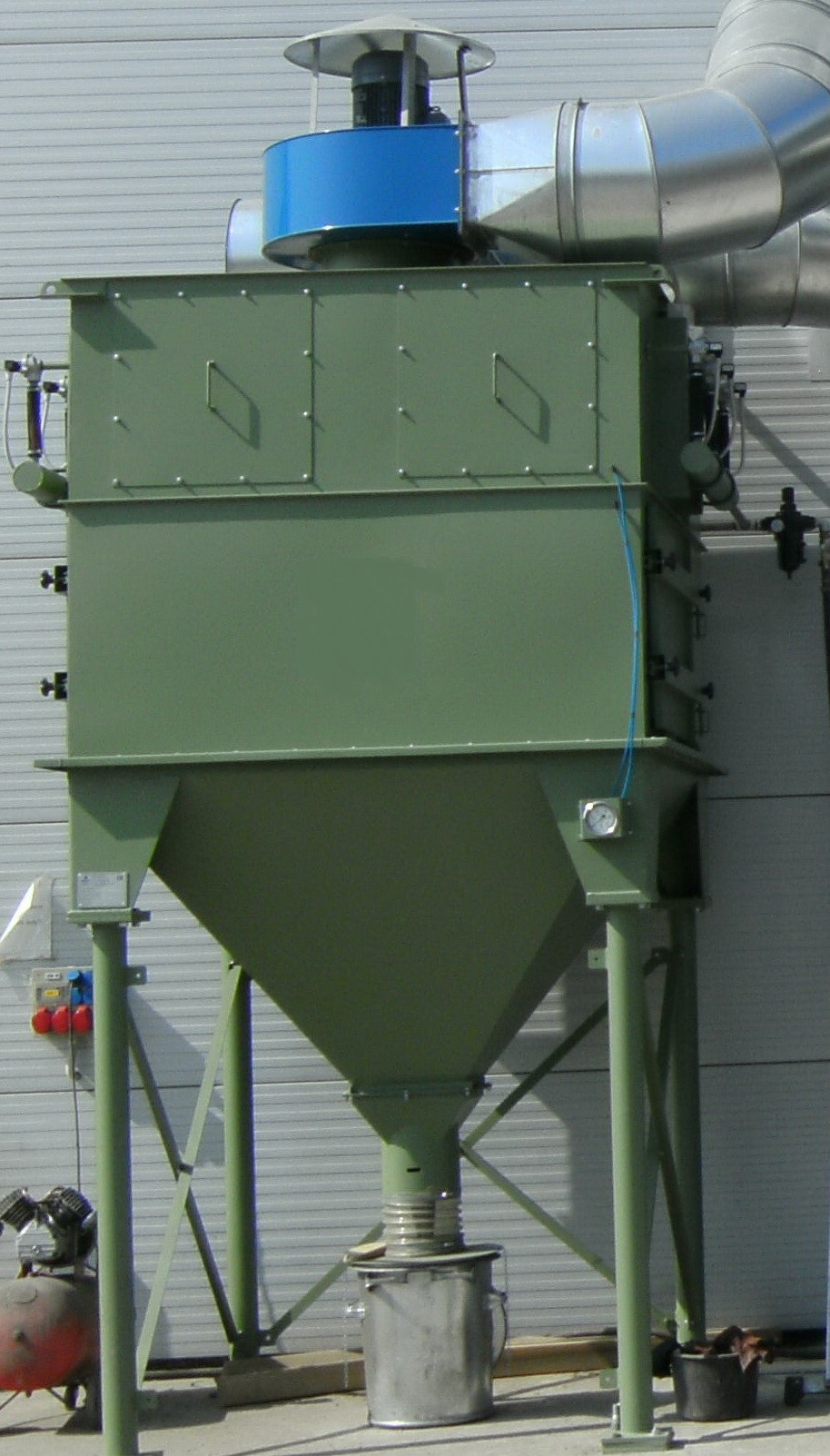
Elements of a dust extraction system:
Radial exhaust fan, cartridge dust collector, exhaust ducting. The exhausted and purified air can be recirculated or ducted to the outside. Dust content of cleaned air after dust collector: max 3 mg/m3.
V-belts and chain drives are covered to ensure inaccessibility. The doors on the machine body are electrically interlocked to prevent the machine being started with the door open and to stop the machine immediately if the door is opened. The electrical equipment on the control cabinet is secured against unauthorised operation by locks. The spreading process cannot be started without dust extraction.
There are 2 emergency stop buttons on the equipment, pressing any of them will stop the equipment immediately. All units of the equipment are connected to the wired contact protection system. The power cables are routed to the motors in a sealed conduit.
The electrical units of the equipment are provided with the necessary standard markings
The noise level of the grit spreading equipment. The noise generated by the machine is expected to be 80-84 db(A) measured in the immediate vicinity of the machine.
The noise generated by the dust extraction and separation unit is 75 and 78 db(A) respectively. A higher noise level than these values is expected when operating the cartridge cleaning valves - the impulse noise level is around 80 db(A).
Environmental dust pollution. As described in the proposal, the airborne particulate matter after the dust filter is below 3 mg/m3. This is confirmed by the measurements carried out so far. The total amount of filtered air can be discharged to the environment. Depending on the material of the parts to be cleaned, the airborne dust contaminant may contain fibrogenic substances, on which the fate of the filtered air must be decided in accordance with the relevant standard „Air quality requirements for workplaces - Particulate matter” - MSZ-21461-2:1992, clause 2.
Engine room (spreading space) The machine housing is a welded plate construction with profile steel reinforcement. The inner surface has manganese steel wear protection. The ABR 380 tip spreader turbine is mounted on top of the machine housing. The spraying head is driven by a 5,5 or 7,5 kW 2800 rpm electric motor with four V-belts. Belt tensioning is achieved by tilting the motor bracket.
The bottom of the engine room is of conical trough construction. This is where the fallen debris and heavier dirt is collected. The conical trough contains a conveyor pulley that transports the spray material to the vertical elevator. The drive unit rotating the rubber spring is located on the machine housing.
A driven, endless rubber belt keeps the parts in continuous motion. To extract the dust inside the machine housing, a dust extraction connection is provided on the machine housing, through which the machine housing is connected to the dust extraction network of the complete machine.
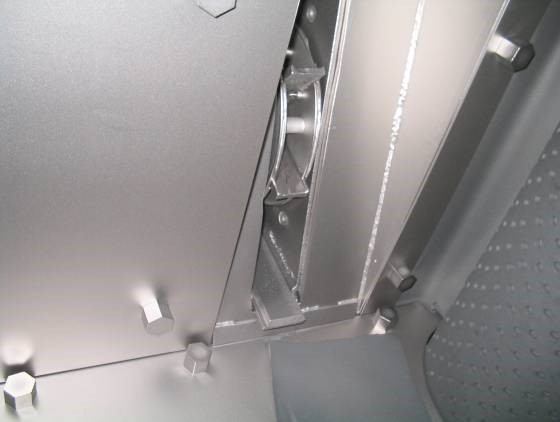
Manganese wear protection The entire inner surface of the spray chamber is covered with a special wear-resistant manganese plate. The thickness of the plate is 5-8 mm. The wear protection protects the machine's components from the damaging abrasive effects of the spray jet for a long time. The characteristic property of the manganese steel 13% is that the surface becomes harder and harder due to the impact abrasion of the grain (Hadfield steel). The manganese steel is welded with special electrodes which have wear protection properties corresponding to the material.
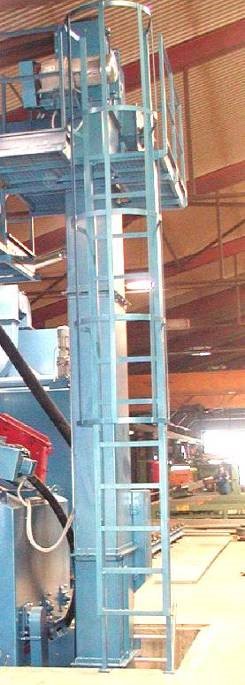
Serial lift with maintenance platform. Main parts: lower stem element, upper stem element and head. The lower wing element includes the lower drum of the elevator, with the bearing arrangement. The lower wing element is a welded construction of edge-bent plate, with connecting frames on the sides to connect the cross conveyor pulley. The upper wing element is a simple rectangular self-supporting structure. It contains the mounting hole for the strap mounting. The head consists of a drum, a chain tensioning device and a release opening to drive the serpentine elevator.
The head is connected to the upper stem by a screw connection. The drive drum in the head drives the serrated strap, which is also used to tension the strap. The cups are attached to an endless rubber strap with a fabric insert by means of a bolt. Transport capacity: 4 m3/hour, Drive power: 0,75 kW
Spray cleaning and dosing tank. A fine plate welded, suction system two-stage spray material separator. The surface of the steps is made of manganese plate. Suction openings are provided on the door. A pipe stub is fitted to the rear end of the wind expander. A butterfly valve controlling the air velocity can be connected to either end of this. A rotating grate is integrated in the grit cleaner to select the larger size of the dirt and a magnetic drum to separate the sand dirt from the grit stream.
The dust particles separated by the wind blower are discharged through a rubber tube into the dust tank. The cleaned particles slip into the feed buffer tank. The spray material separated in the spray cleaner collects in the dosing tank. The sector lock at the bottom of the dosing tank ensures the control of the granule supply to the spray nozzles. The sector lock is pneumatically operated. By adjusting the baffles, the quantity of grit to be dispensed can be set. The spray material in the hopper can only flow through an internal sieve, which traps large particles that can cause disturbances in the spray tank. Tank volume: 0,25 m3 - Number of drain holes: 1
From the drain stubs, the spray material flows through wear-resistant rubber hoses to the spray turbines.
Rubber strap:
Dimensions of the grit distributor and tspace requirements for ponding: according to the attached drawing
Scattering mode: with spreader wheel, manual and automatic mode
Service staff needed: 1 person
Spreading material: Steel mesh GP type 0,4-1,2 mm
Spreading charge: 300 kg
Spreading power: 8-10 suspensions per hour
The noise impact of the machine on the environment: 83-85 dB(A)
Spreading heads
Number: 1 piece
Type: ABRD-380
Diameter: 380 mm
Impeller speed: 2800 rpm
Eye spray: 130 kg/min/spray head
Drive power: 5.5 kW/spray head
Energy demand
Electric: 11,4 kW
Compressed air
Pressure: 6 bar
Quantity: 10 m3/hour
Dust extractor fan power: 5200 m3/h
Electrical data
Supply voltage: 3 x 400 V
Control voltage: 24 V
Frequency: 50 Hz
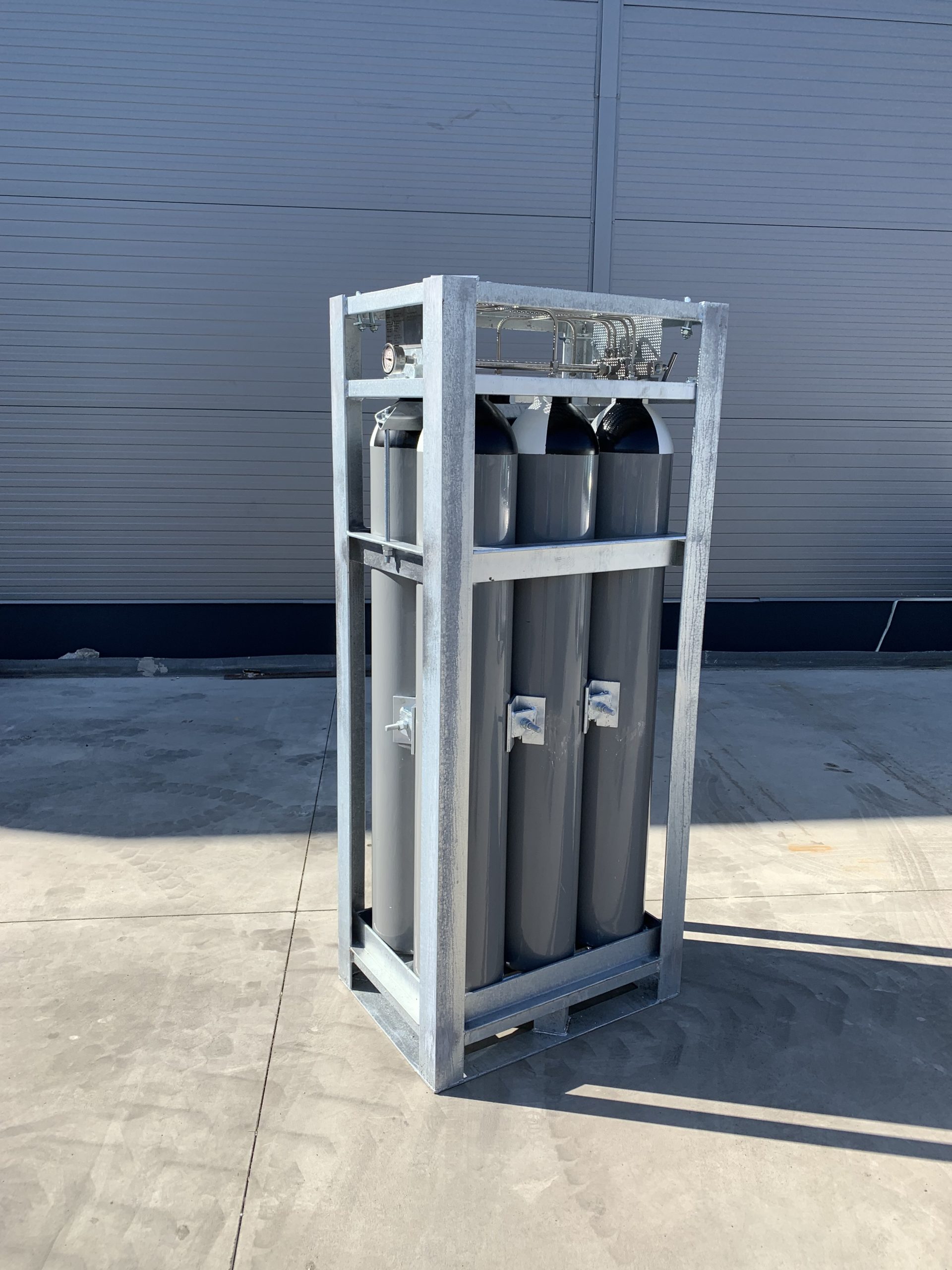
6 x 50 litre gas cylinder bundle for 200 bar, 300 bar or 350 bar operating pressure, for permanent or liquefied gases. Our gas cylinder bundles are manufactured in accordance with EU standards. Welded galvanised structure with stainless steel manifold piping, and many other benefits. Please click for details. For bespoke design and execution, and for volume discounts, please call.
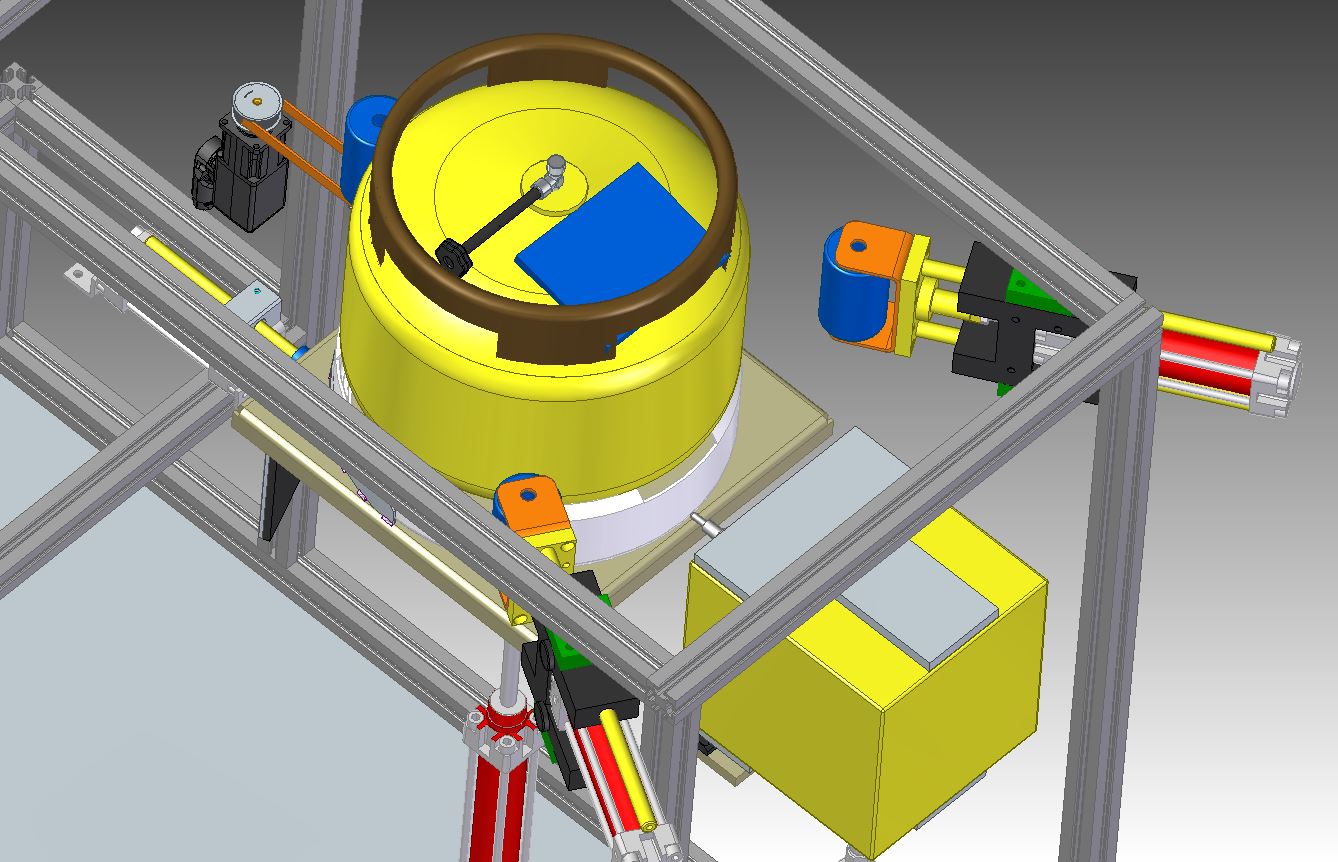
Bespoke labelling and engraving, stamping machine design and manufacture. Whether you have a special bottle size or a special product, we can meet your needs.
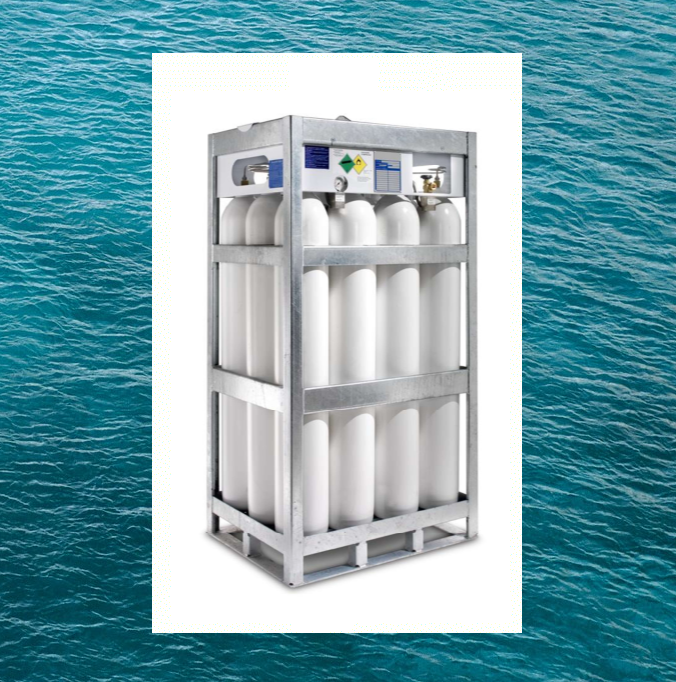
Vertical gas cylinder bundles for marine use. Special fixing lugs, marine-grade surface treatment, approvals for marine and harbour use. Available in 4, 8, 9, 12, 16, 20, 24, 30 cylinder configurations, with operating pressures of either 200 bar or 300 bar. Robot-welded, hot-dip galvanised steel construction. For a bespoke construction and quantity discount, please call us.