




Below is the Pwent The team has compiled the key considerations regarding hydrogen storage and transport specifically for businesses.
The lightest element: hydrogen
Hydrogen is the lightest element by weight and also the most abundant element in the world. It is known for being colourless, odourless, tasteless and highly flammable. Although it is the least dense of all gases, it is found almost everywhere in living organisms and in water. It occurs in the atmosphere in trace amounts, at a concentration of one part per million.
Hydrogen is renowned for its high reactivity, and thus plays a key role in acid-base reactions and in the formation of diatomic gases. For this reason, and due to its reactive and flammable nature, it requires careful handling.
At the same time, the fact that hydrogen is non-toxic is an important factor. When released, it poses no immediate danger to human health or the environment. It is lighter than air, so it disperses quickly, thereby reducing the risk of dangerous build-up. However, it can easily accumulate in enclosed or covered areas. To prevent risks associated with the handling and storage of hydrogen, it is essential to install effective ventilation and monitoring systems in such areas.
Pwent’s safe and effective methods for everyone hydrogen storage meet the need – for a cleaner future.
Methods of hydrogen storage
There are various methods for storing hydrogen, depending on whether it is in gaseous or liquid form. In this section, we outline the specific requirements and security considerations for each method.
Gaseous hydrogen storage
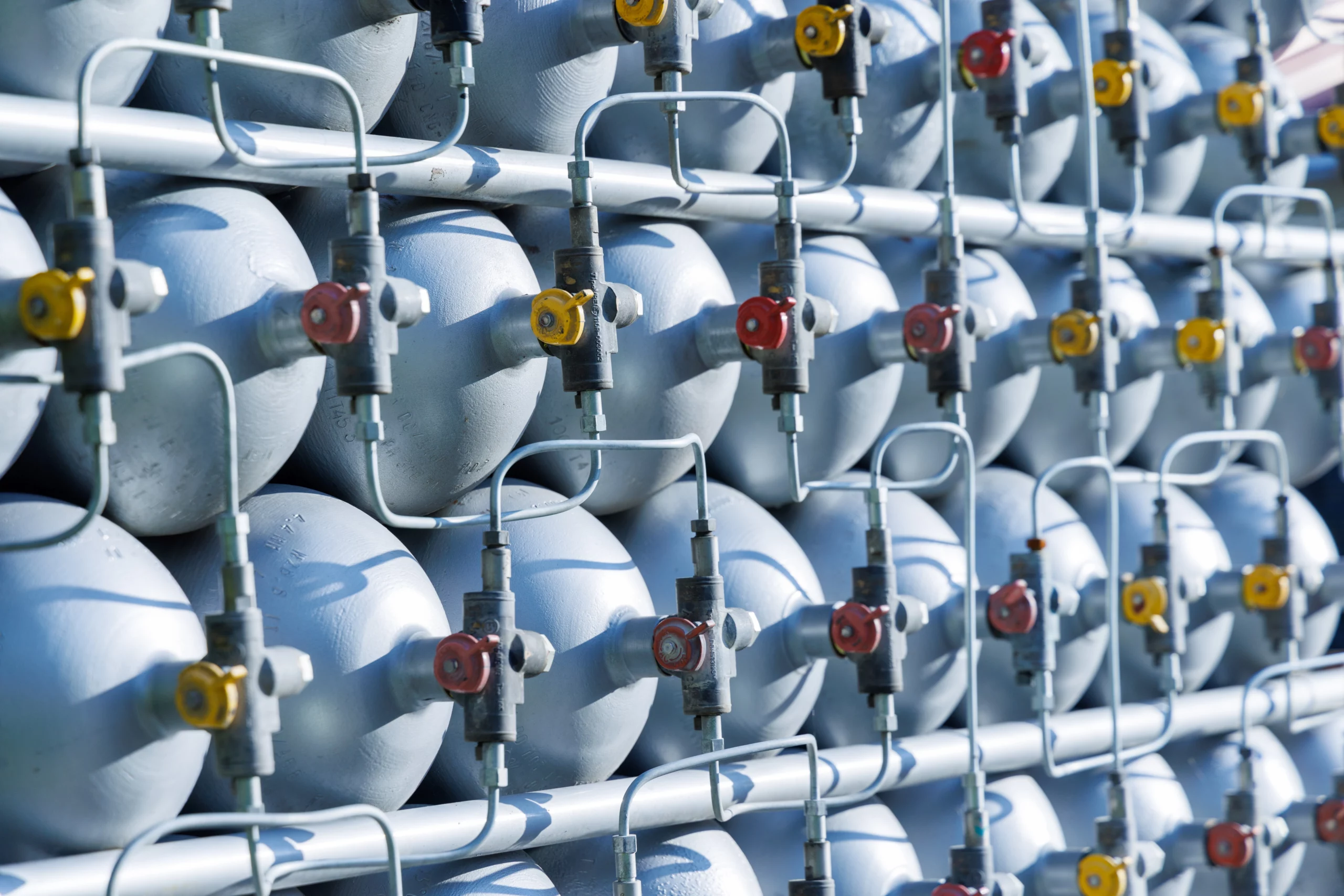
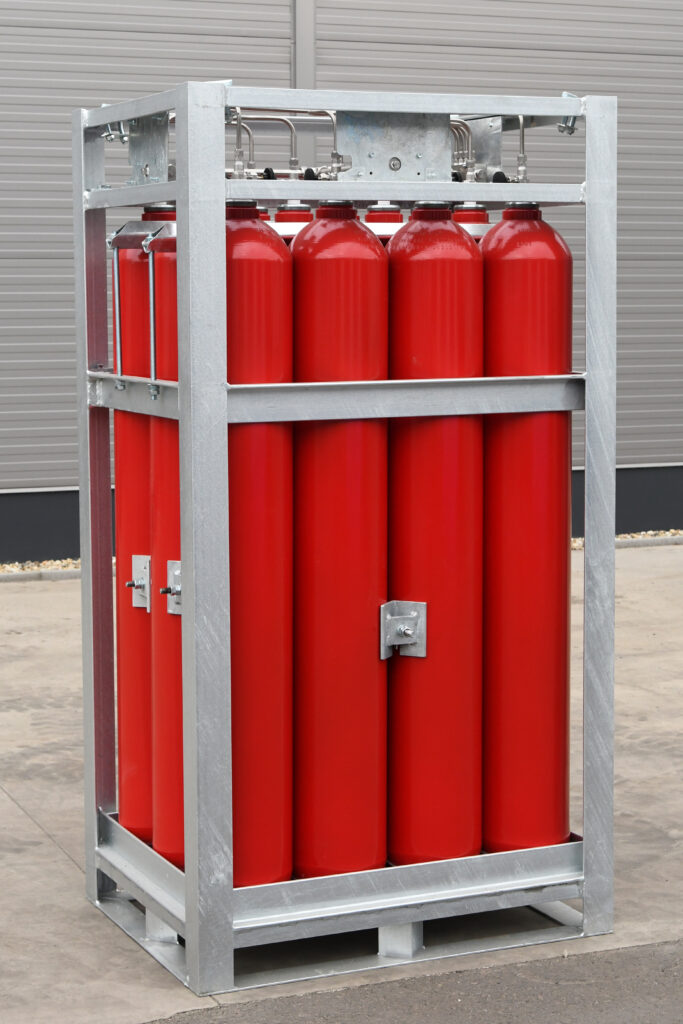
Hydrogen in its gaseous state, produced for industrial use, is generally stored as compressed gas in high-pressure gas cylinders, typically 50-litre cylinders rated at 200 bar, or in tanks, with pressures ranging from 50 bar to 1000 bar.
The transport of gaseous hydrogen requires sturdy, high-pressure tanks and gas cylinders, which is also one of the biggest challenges in this field.
Liquid hydrogen storage
When cooled to -253 °C, hydrogen becomes liquid.
The main challenge in this case is achieving and maintaining extremely low temperatures, as this process also requires a significant amount of energy.
Key considerations for hydrogen storage
One of the key considerations for the safe storage of hydrogen is the selection of suitable materials and manufacturing processes.
Hydrogen has a specific embrittling effect on metals, which can easily lead to material failure. For this reason, manufacturing processes require the use of specialised metals that have been specifically developed to withstand the properties of hydrogen. The importance of appropriate material selection and design cannot be underestimated, as failure to take the embrittling effect into account has previously been the cause of numerous accidents.
Furthermore, hydrogen can undergo a variety of reactions during use. Unlike other gases, hydrogen does not cool down when it expands; on the contrary, it heats up.
This effect is known as the Joule-Thomson effect, and this unique property makes it all the more important to design hydrogen storage systems with care, ensuring they are capable of balancing thermal effects and are safe.

The transport and distribution of hydrogen
In the section below, we examine the efficient transport of hydrogen, with particular reference to the role of high-pressure tanks in road transport, and the contribution of piping systems to widespread distribution.
High-pressure tanks
Gaseous hydrogen is usually distributed in high-pressure tanks and transported by lorry.
When transporting large quantities, several gas cylinders are bundled together on CGH2 (compressed gaseous hydrogen) tank semi-trailers. For transport, the large, usually steel-made tube containers are grouped together in protective frames.
Pipe systems
In regions with significant and consistent demand for hydrogen, pipeline systems are considered an efficient transport option. Hydrogen pipelines are capable of transporting 88% of the energy content of methane pipelines. This comparison is important because hydrogen is emerging as a viable alternative to methane in energy distribution.
Methane, the primary component of natural gas, is currently the dominant fuel used for heating and electricity generation, but it is a powerful greenhouse gas. A switch to hydrogen, which produces water when burned, could significantly reduce carbon dioxide emissions associated with energy consumption.
A wide range of applications
The distribution of hydrogen also extends to exciting and innovative sectors such as sustainable energy generation, or water purification and storage using solar energy. These areas of application highlight the diverse roles and growing importance of hydrogen.
Featured projects
Our experience in technologies for the distribution and storage of hydrogen also extends to major investments in Hungary.
This includes Mátraháza Power Station, to which we contributed by supplying bundles of 200-bar gas cylinders comprising 16 and 12 cylinders respectively, which we filled on site and delivered to the user via public roads. The Kardoskút Aquamarine a project for which we supplied four ISO containers, each containing 12 2300-litre, 200-bar JUMBO cylinders and bundles of gas cylinders.
The former is an on-site buffer that provides a temporary solution for hydrogen storage, until the gas is filled into cylinders or blended in small quantities with natural gas to enrich it.
Safety and innovation in hydrogen distribution
The primary consideration in hydrogen storage and transport is safety, particularly given the substance’s reducing properties and its specific thermal characteristics.
That is why at Pwent we always use solutions that comply with European regulations, such as the ISO 11114 standard. Compliance with this standard ensures that gas cylinders meet strict performance standards, including pressure resistance and leak-tightness, which is essential for safe and efficient cross-border gas transport.
Why is Pwent a good choice?
At Pwent, we are committed to providing safe, efficient and innovative solutions within the hydrogen storage and transport industry. We provide support to companies seeking innovative solutions for the storage and transport of hydrogen, using the most reliable methods available.
By continuously expanding our product range, we are adapting to the changing needs of the industry. We are expanding our existing range of bundles, which previously held a maximum of 16 cylinders, with a new range, where the maximum number of cylinders will be 24 and the available operating pressure will be 400 bar.
Thanks to our state-of-the-art storage solutions and pioneering distribution techniques, our products are at the forefront of harnessing the potential of hydrogen, whilst keeping sustainability considerations in mind.
Safe storage of hydrogen: best practices
Understanding the properties of hydrogen is essential for any business that wishes to use this unique substance as a clean energy source.
Innovative distribution methods suitable for the safe storage of hydrogen have developed rapidly, ranging from pipelines to high-pressure tanks.
Developments focusing on safety and efficient hydrogen storage solutions are crucial to unlocking the full potential of hydrogen in the green energy sector and beyond.
Find out more the future of clean energy with Pwent; a trusted partner in safe and innovative hydrogen storage and transport.