




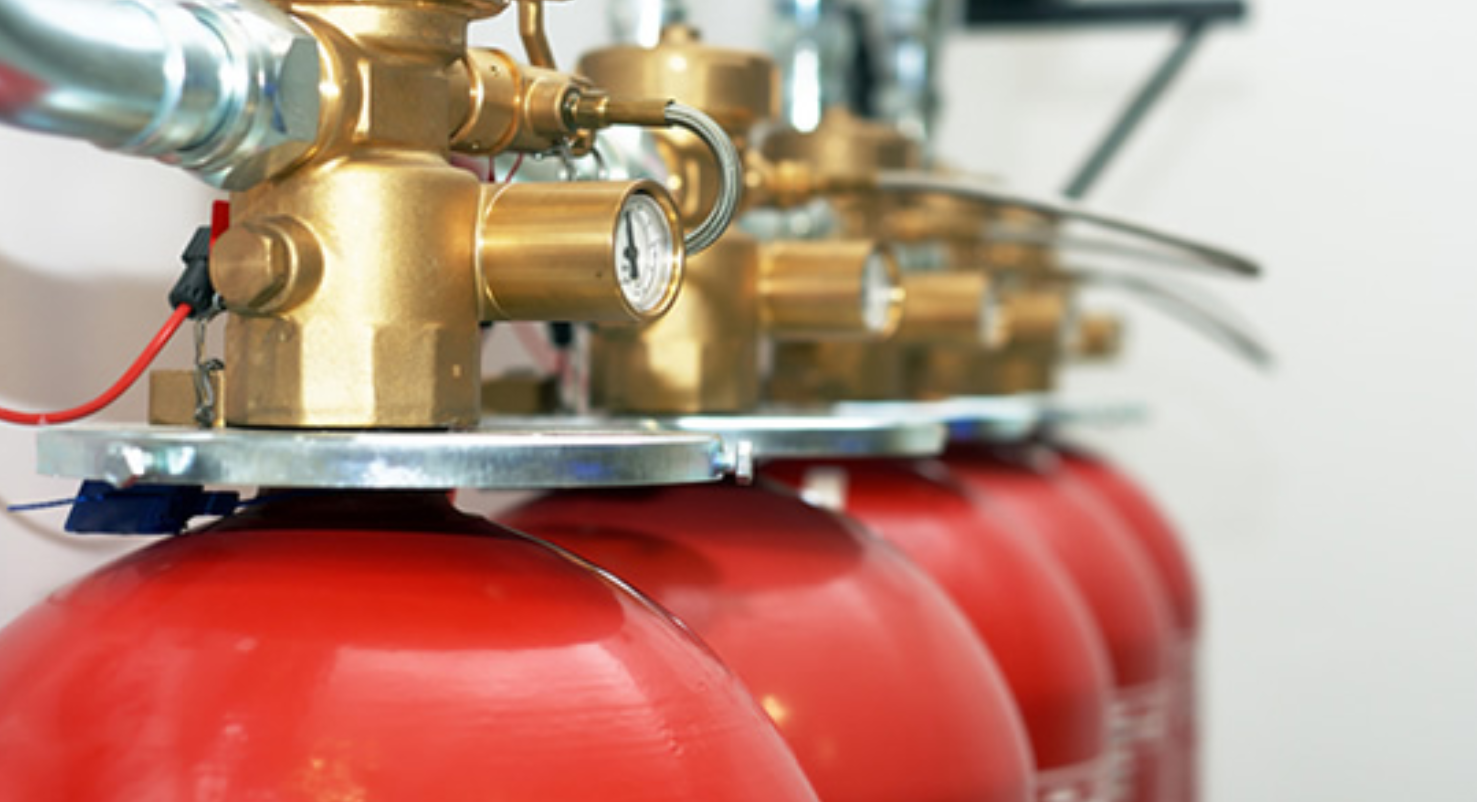
Previously, large companies such as Siemens, Tyco, Kidde, DuPont, and 3M, among others, had the right to maintain clean agent fire suppression systems like FM200 and NOVEC 1230. Now, the market is increasingly open to medium-sized companies as well.
It is very important what type of machinery you need and use. From this article you can have an overview on the machines connected to FM200 and NOVEC filling.
The main questions that help decide which machines to choose for handling chemical vaccines
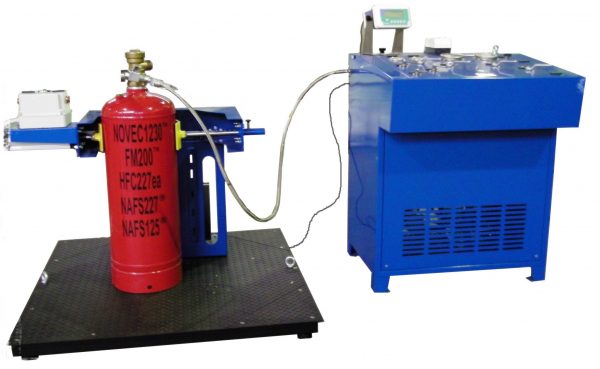
- What is the Gas that you would like to work with? FM200, NOVEC, both, or other agents such as HALOTRON, HFC227ea, HFC125, HFC23?
- What is the maximum pressure which system would you like to handle? 25 bar, 42 bar, 50 bar, 70 bar?
-
What is the function which you'd like to use?
- Only fill empty cylinders from a big tank?
- Top up full cylinders from a tank?
- Recover the remaining FM200 or NOVEC gas from a large tank?
- Empty and recover any remaining pressurised gas from a cylinder?
-
What is the The size of the gas cylinders That you'd like to handle?
- Minimum and maximum diameter of the gas cylinder
- Minimum and maximum length of the gas cylinder
- Weight of the cylinders
Once we have all this data, we'll be at the point where we can choose the machines for your needs.
Functions and basic definitions
Top filling refers to a method of refilling a device, typically an electronic cigarette or a vape, by adding liquid through an opening located at the top of the tank. This contrasts with bottom-filling methods, where the liquid is added from the base.
There are instances when you fill empty cylinders. In such cases, the pressure in the source cylinder assists the pump. If you wish to transfer more gas or liquid into an already filled cylinder, then the pump is working against the pressure of the cylinder being filled.
There is a pressure difference between the source cylinder and the target gas cylinder. The pump has a DELTA pressure. This is the pressure difference the pump can work against. This can be useful if the cylinders were opened due to an alarm. Some gas was released, but not all.
Recovery from the tank
If you are filling from large tanks, typically 500-800 litres, into gas cylinders, you must clearly separate the machines that only pump liquid from those that pump gas phases as well. If a machine is not ready to recover the gas phase from the tank, you will lose 15-20 kg of gas.
Given the high cost of FM200, the financial loss will be significant. If you have a machine capable of recovering the gas phase from the tank, you’ll save that money. You need to check the recovery efficiency. This is usually specified as %.
Recovery from pressurised gas cylinders
There are situations, typically before retesting of gas cylinders, when you have to empty already pressurised cylinders. In this case you could have several options. Of course, we do not want to lose the gas, so here we are talking about two options.
The first option is when you fill the pressurised FM200 or NOVEC 1230 into another cylinder that has already been retested. The second option is when you collect the gas into a larger tank and then depressurise and clean it, for example using our separator unit and filtering unit. In this case, the machine must also be capable of withstanding the pressure on the inlet side. You must check the efficiency of the recovery. This is usually specified as %.
A summary of a basic filling and recovery machine for FM200 and NOVEC 1230 would focus on its core functions and components for handling these extinguishing agents. **Core Functions:** * **Recovery:** This machine's primary function is to safely and efficiently recover FM200 and NOVEC 1230 extinguishing agent from fire suppression systems. This is crucial for environmental reasons, to prevent the release of these agents into the atmosphere, and for economic reasons, allowing for the reuse of expensive agents. * **Filling/Recharging:** The machine also allows for the refilling of fire suppression cylinders with FM200 or NOVEC 1230. This is done to replenish systems after discharge or to prepare new systems. * **Leak Detection (often integrated):** Many machines will have a built-in capability to detect leaks in portable containers or the system being serviced. * **Purging (sometimes integrated):** Some basic machines may offer a purging function to remove air or moisture from cylinders before refilling. **Key Components of a Basic Machine:** 1. **Compressor:** The heart of the recovery process. It draws the gaseous extinguishing agent from the fire suppression cylinder and compresses it into a liquid state for storage. 2. **Storage Tank/Cylinder:** A designated container to hold the recovered extinguishing agent. This is typically rated for the pressure of the agent. 3. **Hoses and Connectors:** Durable, pressure-rated hoses designed to connect the machine to the fire suppression cylinders. A range of adaptors is usually provided to fit different cylinder valve types. 4. **Valves and Manifolds:** A system of valves to control the flow of the extinguishing agent during both recovery and filling operations. This allows for isolation and direction of the agent. 5. **Pressure Gauges:** Essential for monitoring the pressure during the recovery and filling processes, ensuring safe operation and accurate filling levels. 6. **Filters:** Often included to remove any contaminants or moisture from the extinguishing agent during recovery, maintaining its purity for refilling. 7. **Power Supply/Motor:** To drive the compressor and other operational components. 8. **User Interface (basic):** This might be as simple as analogue gauges and manual control levers or switches. More advanced basic models might have simple digital readouts. 9. **Housing/Frame:** A robust structure to hold all components and provide portability. **Operational Flow (Simplified):** * **Recovery:** * Connect the machine's recovery hose to the fire suppression cylinder. * Open valves to allow the agent to flow into the machine. * The compressor draws the agent, compresses it, and transfers it to the storage tank. * Monitor pressure gauges to ensure safe operation and complete recovery. * **Filling:** * Connect the machine's filling hose to an empty or partially filled cylinder. * Connect the storage tank containing the recovered agent to the machine. * Open valves to allow the agent to flow from the storage tank, through the machine, and into the cylinder. * Fill to the correct weight or pressure, often monitored with scales or pressure gauges. **Considerations for Basic Machines:** * **Safety:** Designed with safety features to prevent over-pressurisation and handle the specific properties of FM200 and NOVEC 1230. * **Portability:** Basic machines are often designed to be relatively portable for on-site servicing. * **Maintenance:** Simpler designs generally lead to easier maintenance. In essence, a basic FM200/NOVEC 1230 filling and recovery machine is a tool that facilitates the closed-loop management of these fire suppression agents, enabling their efficient reuse and minimising environmental impact.
| PNEUMATIC UNITS | |||||||||||||
| UNIT | Clean Agent | FILLING | Top Filling | RECOVERY UP TO |
MAXIMUM PRESSURE UP TO |
PRESSURISATION WITH N2 |
|||||||
|---|---|---|---|---|---|---|---|---|---|---|---|---|---|
| FE 36TM | HALOTRON® | FM200TM | NOVEC1230TM | HFC227ea | HFC125 | HFC-23 | PORTABLE FIRE EXTINGUISHERS |
CYLINDERS | |||||
| THB/BP | X | X | X | X | > 99% | 15 bar | X | ||||||
| THB/G1HP | X | X | X | X | X | X | X | X | X | > 99% | 25 bar | X | |
| THB/5 | X | X | X | X | X | X | X | X | X | > 99% | 50 bar | X | |
| THB523/H1 | X | X | X | X | X | X | X | X | X | X | > 99% | 70 bar | X |
*with 2 pumps
| ELECTRIC UNITS | ||||||||||||||
| UNIT | Clean Agent | FILLING | Top Filling | RECOVERY UP TO |
MAXIMUM PRESSURE UP TO |
PRESSURISATION WITH N2 |
||||||||
|---|---|---|---|---|---|---|---|---|---|---|---|---|---|---|
| FE 36TM | HALOTRON® | FM200TM | NOVEC1230TM | HFC227ea | HFC125 | HFC-23 | PORTABLE FIRE EXTINGUISHERS |
CYLINDERS | ||||||
| 103/FM | X | X | X | X | X | X | X | X | X | – | 60 bar | X | ||
| 100/103FM | X | X | X | X | X | X | X | X | X | <95% | 60 bar | X | ||
| UNIT | FILLING | RECOVERY FROM SOURCE TANK, GAS PHASE | RECOVERY FROM CYLINDER, LIQUID PHASE | RECOVERY FROM CYLINDER, GAS PHASE |
|---|---|---|---|---|
| 103 FM | 6 kg/min | No | Yes, up to a point. | No |
| 100/103-FM | 6 kg/min | max. 95% efficiency, 0.7 kg/min, max. 21 bar | Yes, up to a point. | No |
| THB/BP | 6 kg/min | max. 99% efficiency, 0.7 kg/min, max. 50 bar | YES | 15 bar |
| THB/G1HP | 6 kg/min | max. 99% efficiency, 0.7 kg/min, max. 50 bar | YES | 99%, DELTA pressure max 25 bar |
| THB/5 | 6 kg/min | max. 99% efficiency, 0.7 kg/min, max. 50 bar | YES | 99%, DELTA pressure max 50 bar |
| THB523/H1 | 6 kg/min | max. 99% efficiency, 0.7 kg/min, max. 50 bar | YES | 99%, DELTA pressure max 65 bar |
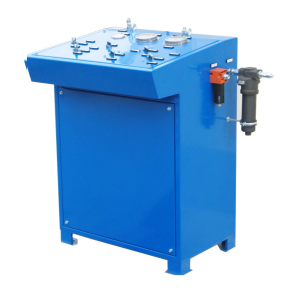
THB/523 H1 model for Halon and other clean agent filling and recovery.
If possible, use a separate filling machine for Novec and FM200. Why?
The FM200 has a natural 10-bar gas cushion. When you want to clean or empty the machine after FM200 filling, it is rather easy. The remaining liquid phase in the lower part of the pipes will become gaseous in a short time and will be released from the machine. After this, you can fill with NOVEC 1230 without proper contamination risk.
A slight problem could arise if you wish to clean the machine after NOVEC usage. The NOVEC has only a very small gas cushion. If the NOVEC cleaning agent remains in the lower parts of the machine's piping, then it will stay there for a longer period. It could contaminate the FM200.
Mixing for clean agents is important
For fire system usage, you have to pressurise the FM200 or NOVEC with nitrogen. Our machines can regularly automate the pressurisation with a connected nitrogen gas cylinder. After the cylinder reaches the necessary pressure, it needs some time for proper mixing between the nitrogen and the clean agent.
Without forced mixing, complete mixing of FM200 could take 2-3 days. With NOVEC, natural mixing could take 30-50 days.
That is why in the case of NOVEC usage, it is essential to have a proper mixing unit, which can shorten that 30–50 day mixing time. If you do not mix properly, then the pressure could drop until complete mixing. This could cause a false alarm from the fire suppression system.
CLICK Here for an article about some clean agent facility installation in Romania.